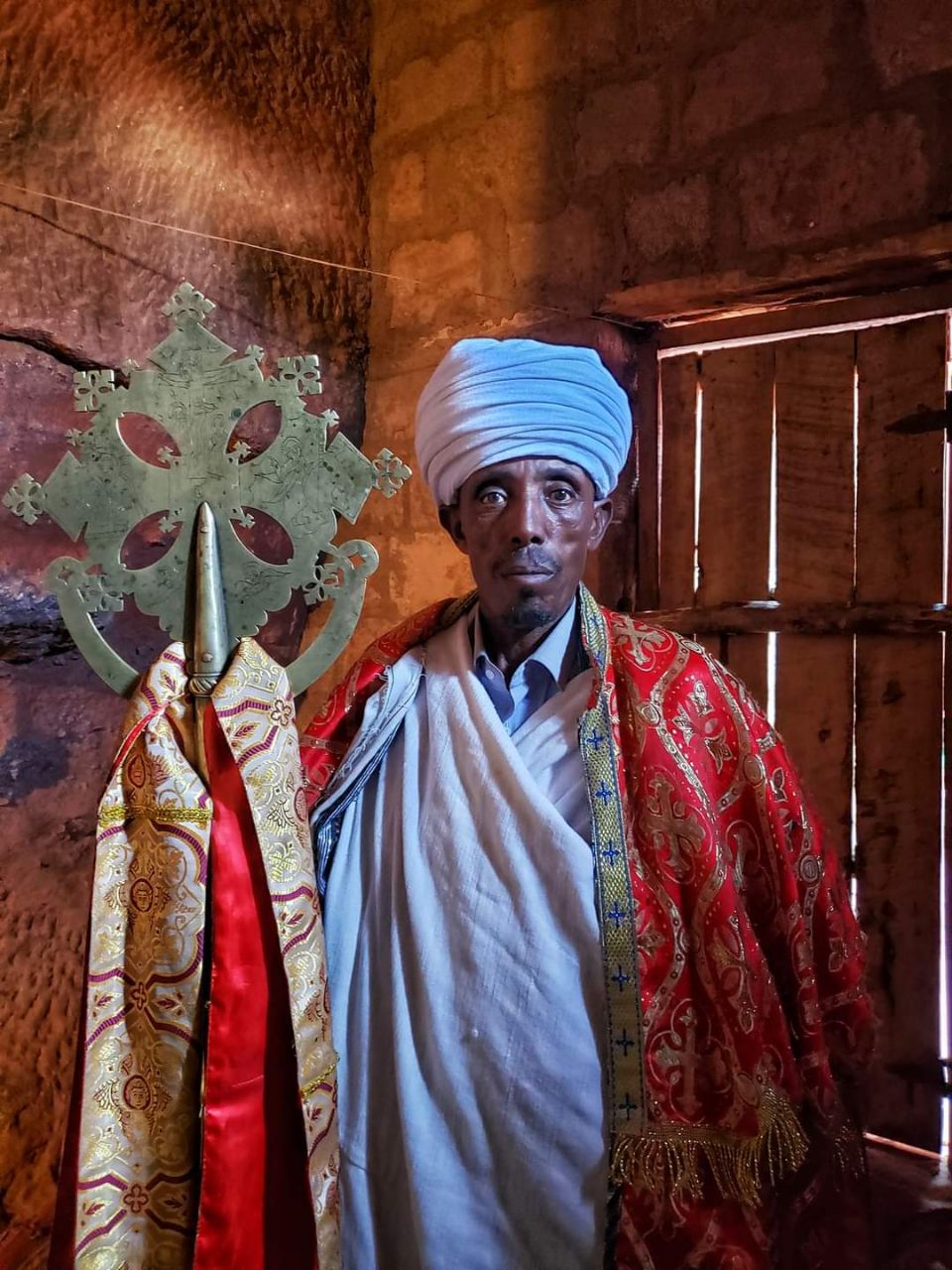
The extraordinary isolated town of Lalibela in northern Ethiopia is set high in the Lasta Mountains at the foothills of a chain called Abuna Yosef, situated just east of Lake Tana—the source of the Blue Nile.
After the fall of the Kingdom of Axum, the kings from the Zagwe dynasty transferred their residence to Lalibela, south-east of Axum. There, they erected a flourishing and densely populated capital city, as the residence of their Middle Age dynasty. Lalibela, previously known as Roha, was named to commemorate its eponymous king, at the end of 12th century. The city was established as a New Jerusalem. This was partly due to the fact that during that historical period, travelling on pilgrimages to Jerusalem itself proved impossible, because the lands between Jerusalem and Ethiopia had been conquered by Muslims.
The churches of Lalibela are awe-inspiring. These intriguing edifices have in their entirety been carved out of a homogeneous mountain of red volcanic tuff. They are absolutely unreal, especially given the primitive tools of the day, and thus seem to have been created by some kind of a superhuman power. It’s no wonder Lalibela has been named one of the Eight New Wonders of the Ancient World.
Rock temples might be admired in different places in the world, but it is solely here that not only the internal space, but also façades, external walls and courtyards around the churches have all been carved out of a single mountain. The 12-13th century Rock hewn churches are still very active places of worship, and host many major religious Ceremonies throughout the year.
While all eleven churches have been carved out of solid rock, each has retained unique architectural features. Take a wander through tunnels and stairways linking the churches together, and marvel at a truly unique living piece of history.